
Best Time of Year to Pour Concrete in Sevierville, TN
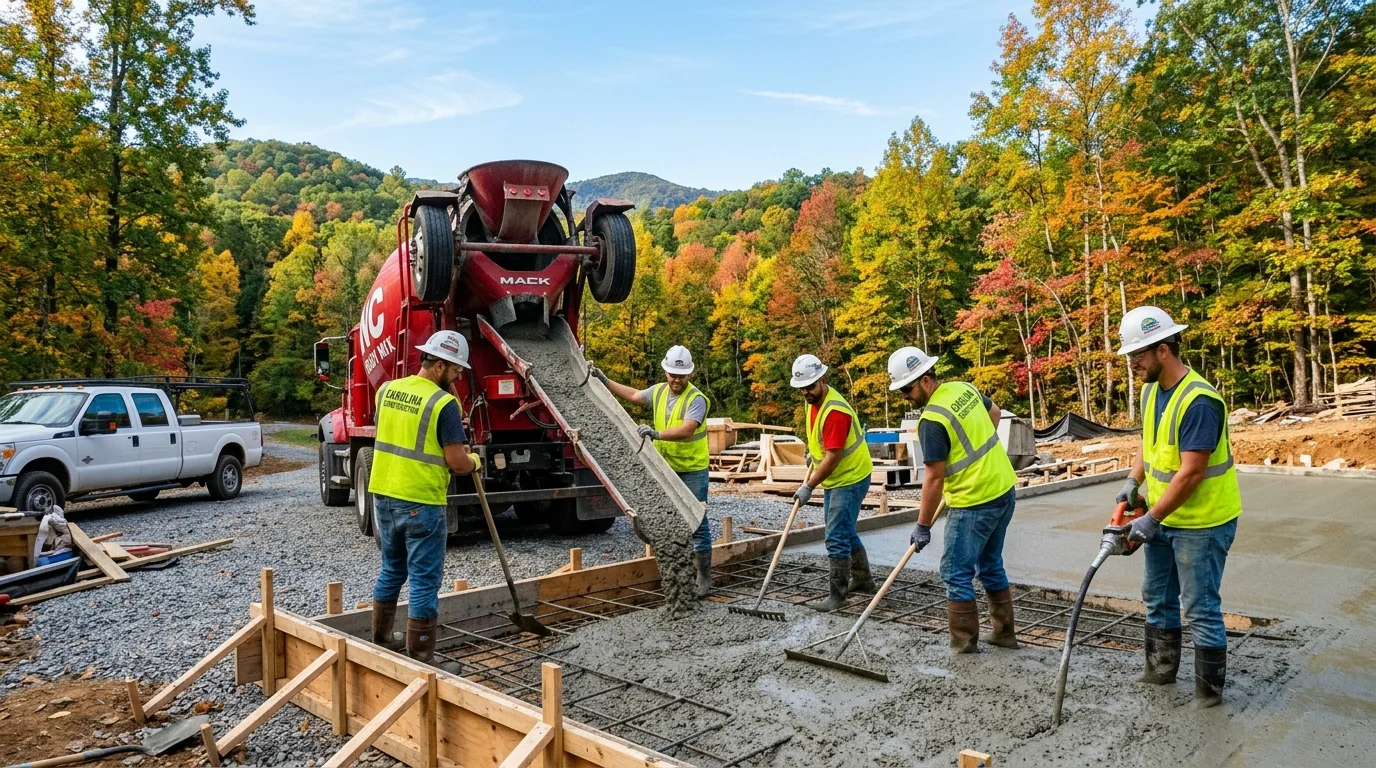
Concrete curing is highly temperature-dependent — and Sevierville’s mountain climate creates distinct seasonal windows where the temperature range is ideal, and windows where it’s genuinely risky. Getting the timing right isn’t just a preference; it affects the structural quality of the finished product. Concrete poured in the wrong conditions cures incompletely, weakens, or gets damaged during the critical early cure period before it reaches design strength.
In this post, we cover each season’s concrete conditions in Sevierville, what the ideal curing temperature range is and why it matters, the specific risks of winter and summer pours, and how Sevierville’s tourist season affects scheduling considerations.
Plan Your Sevierville Concrete Project for the Right Season
We help homeowners and property owners time projects for best outcomes. Free estimates and scheduling advice for Sevier County. Call (888) 376-0955.
Why Temperature Matters for Concrete Curing
Concrete doesn’t dry — it cures through a chemical reaction called hydration, where water reacts with cement compounds to form the crystalline structure that gives concrete its strength. This reaction is temperature-dependent: it proceeds optimally at 50–75°F and slows significantly below 50°F. Below 40°F, hydration nearly stops. Above 90°F, it accelerates too quickly, reducing long-term strength and increasing the risk of shrinkage cracking from rapid moisture loss.
In Sevierville’s climate, these temperature boundaries are crossed regularly during winter and summer, creating seasonal scheduling considerations that flat-ground markets with milder climates don’t face to the same degree.
Season-by-Season Guide for Sevierville
Spring: Late April Through Early June — Best Window
Late spring is the ideal time for concrete work throughout Sevier County. Temperatures consistently stay in the 50–75°F range during both day and night in late April and May. Humidity is moderate. Rainfall is present but typically manageable with brief scheduling windows. The risk of overnight freeze is very low after mid-April in Sevierville.
This window also has a practical scheduling advantage: spring is before Sevierville’s peak tourist season, which means ready-mix truck access on mountain roads is easier and crews have more scheduling flexibility. If you’re planning a major concrete project — driveway replacement, foundation pour, large patio — late April through May is the best target.
Summer: June Through September — Manageable With Precautions
Summer concrete work in Sevierville is common and generally successful with the right precautions. The challenge is heat acceleration: when air temperatures exceed 80–85°F, concrete sets faster than at ideal conditions. For large pours, this means crews have a shorter working window to finish and texture the surface before it stiffens.
Summer concrete work requires moisture retention measures: starting pours in the early morning before peak heat, covering finished surfaces with wet burlap or plastic sheeting to retain moisture during cure, and using curing compounds. Concrete poured in peak summer heat without these precautions is more prone to shrinkage cracking.
Sevierville’s peak tourist season (July through mid-September) also creates practical scheduling challenges. Ready-mix trucks navigating tourist-heavy mountain roads during peak foliage periods may face delivery delays. For large commercial pours in the Exit 407 and Pigeon Forge corridor, traffic coordination is a real planning consideration.
Fall: Late September Through November — Excellent Second Window
Fall is the second-best window for concrete in Sevierville, often preferred for its lower humidity and consistently mild temperatures. Late September through October provides ideal curing conditions — overnight lows above 40°F until late October in most years, and daytime highs in the 60–70°F range perfect for extended working time on large pours.
Fall has an additional strategic advantage in Sevierville: pouring concrete in fall means the surface has maximum cure time before the first freeze-thaw cycles of December arrive. A slab poured in October and sealed before December has 6–8 weeks to reach full strength before encountering its first winter — giving it the best possible start against freeze-thaw damage.
Scheduling fall concrete work in Sevierville requires advance planning. Sevierville’s fall foliage season (October) brings significant tourist traffic that affects road access for commercial projects and sometimes residential projects on narrow mountain roads. Book early.
Winter: December Through February — Avoid Unless Prepared
Winter concrete pours in Sevierville carry genuine risk and should only be undertaken by contractors who actively plan for cold-weather conditions. The specific hazard in Sevierville’s climate is a pattern already discussed in our freeze-thaw damage guide: afternoon temperatures that warm concrete surfaces followed by overnight lows in the low 20s°F that freeze freshly placed concrete before it reaches adequate strength.
Freshly placed concrete that freezes within the first 24 hours suffers permanent damage — the hydration reaction stops, ice crystal formation disrupts the curing matrix, and the concrete never achieves its design strength. In Sevierville’s January and February climate, where a warm afternoon can be followed by a hard freeze the same night, this risk is real for any outdoor pour.
Cold-weather concrete pours require insulating blankets over finished surfaces, potentially heated enclosures for large pours, and heated water in the mix batch in extreme cold. These measures add cost. If your project can be scheduled for spring, that’s almost always the better choice.
Ready to Schedule Your Sevierville Concrete Project?
We'll help you time your project for optimal conditions and schedule around Sevier County's seasonal factors. Call (888) 376-0955.
Ready-Mix Scheduling in Sevier County
An important consideration for concrete timing in Sevierville that most scheduling guides don’t mention: Sevier County has limited primary ready-mix suppliers. During peak project seasons — late spring and early fall — demand for concrete delivery is high and scheduling lead times increase. Large pours require advance booking of ready-mix delivery, especially for projects requiring multiple loads timed for continuous pouring.
This means late April and early October bookings fill up faster than in flat urban markets. If you’re planning a significant concrete project for the best seasonal windows, contact contractors at least 4–6 weeks before your target pour date to reserve scheduling.
Frequently Asked Questions
What’s the absolute best month to pour concrete in Sevierville?
May is the single best month for concrete in Sevierville. Temperatures are consistently in the ideal 50–75°F range, frost risk is essentially zero, tourist traffic is pre-peak, and ready-mix scheduling is more flexible than the busy summer and fall foliage periods. October is the second-best option with very similar conditions.
Can you pour concrete in January in Sevierville?
Yes, but it requires proper cold-weather protection: insulating blankets over finished surfaces, monitoring of overnight temperatures, and potentially heated mix water. January in Sevierville is the riskiest month for concrete — the afternoon/overnight temperature swing that creates freeze-thaw conditions can damage freshly placed concrete on the same day it’s poured. If your project can wait until spring, it should.
Does the tourist season really affect concrete scheduling in Sevierville?
For residential projects on private lots, tourist traffic is a minor consideration. For commercial projects along the Pigeon Forge Parkway, Exit 407 corridor, or the Governor’s Crossing area, peak tourist season (June–September and October foliage) significantly affects ready-mix truck access and delivery timing. Large commercial pours during peak season require early-morning scheduling and traffic coordination. See our commercial concrete service page for how we handle commercial scheduling in Sevierville’s tourism environment.
Related: