
Concrete Sealing & Maintenance Guide for Sevierville's Climate
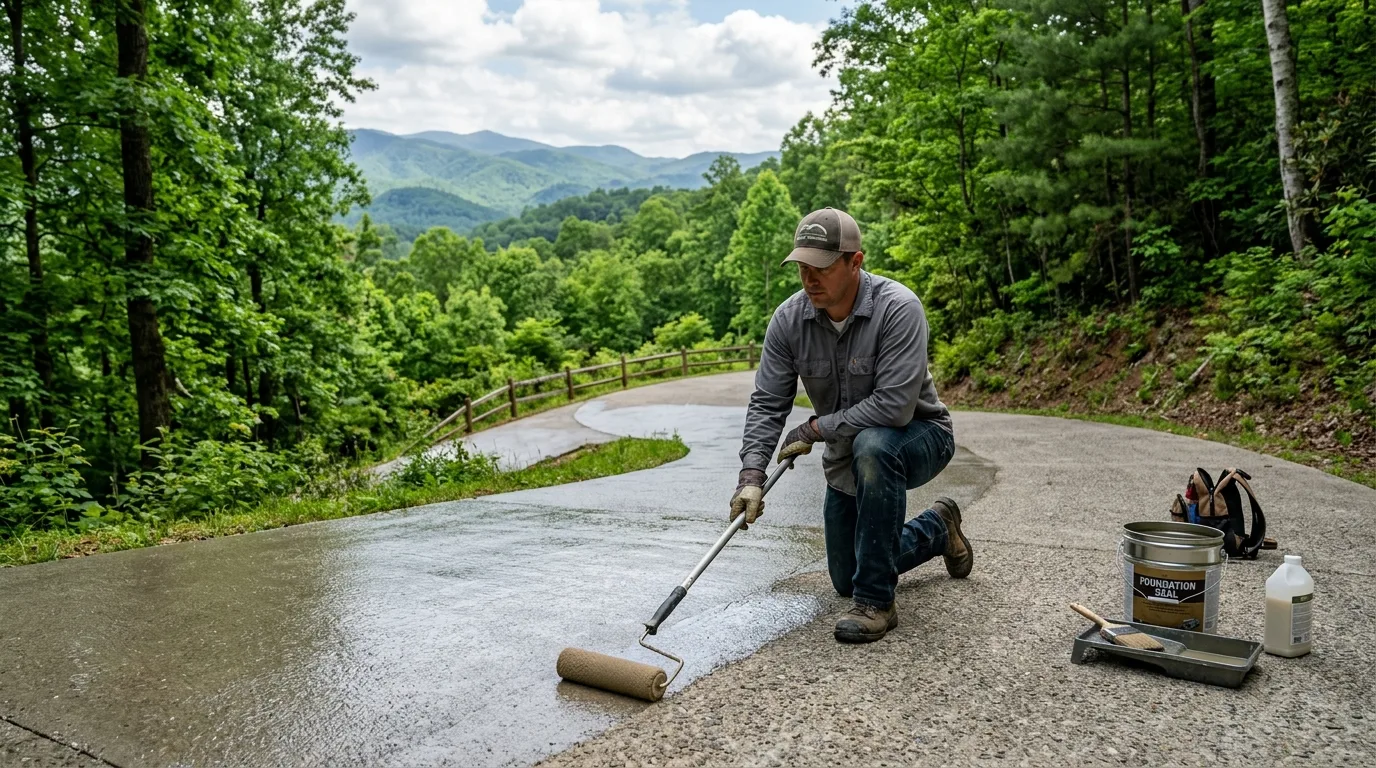
What sealer type is right for a Sevierville driveway or patio — and when should it be applied? These questions come up after every concrete installation, and the answers in East Tennessee are different from what most general guides recommend because Sevierville’s freeze-thaw climate puts specific demands on concrete sealing that mild-climate guidelines don’t address. Get the sealer right and it extends concrete life by years; get it wrong and you’re reapplying every 18 months or watching a film sealer peel off in sheets after the second winter.
In this post, we cover the main concrete sealer types available for Sevierville properties, which perform best in East Tennessee’s climate, when to apply, and what a realistic concrete sealing maintenance schedule looks like.
Concrete Sealing in Sevierville, TN
We seal new and existing concrete with the right products for East Tennessee's climate. Free estimates for sealing and maintenance work. Call (888) 376-0955.
Why Concrete Sealing Matters More in Sevierville’s Climate
The case for sealing exterior concrete in Sevierville is stronger than in mild-climate markets because of the mechanism of freeze-thaw damage: water infiltrates unsealed concrete pores, freezes, expands, and fractures the concrete matrix. Sealing eliminates the infiltration step — which eliminates the freeze-thaw damage mechanism at the surface level.
Unsealed concrete in Sevierville’s climate faces 40–60 freeze-thaw cycles per winter (discussed in detail in our freeze-thaw damage guide). Each cycle causes microscopic damage that accumulates visibly within 3–5 winters on driveways and patios that weren’t sealed at installation or haven’t been resealed. Sealed concrete on the same property survives the same cycles without surface deterioration — the sealer absorbs and redirects the moisture pressure rather than the concrete matrix.
For vacation rental properties in Sevier County, the sealing maintenance schedule has a second practical benefit: sealed concrete resists staining from fire pit ash, grill grease, and the foot traffic concentrated on outdoor living areas during peak rental seasons. The combination of appearance retention and freeze-thaw protection makes regular concrete sealing a straightforward maintenance investment for any Sevierville property.
Sealer Types and Their Performance in East Tennessee
Penetrating Sealers (Silane-Siloxane, Siliconate)
Penetrating sealers are the recommended choice for driveways, patios, and sidewalks in Sevierville’s freeze-thaw climate. These sealers infiltrate the concrete’s pore structure and react chemically to form a water-repellent barrier inside the concrete, rather than on top of it. They don’t change the surface appearance (no gloss) and don’t create a film that can peel or trap moisture.
The freeze-thaw performance advantage of penetrating sealers is significant: because the sealer is inside the concrete rather than on top, water vapor can still escape (the concrete “breathes”), preventing moisture buildup that causes film sealers to delaminate. In Sevierville’s wet winters, this vapor permeability is important — trapped moisture between a film sealer and concrete face is a failure mechanism that penetrating sealers don’t have.
Reapplication frequency: Every 3–5 years for residential driveways and patios with normal use. Every 2–3 years for high-traffic surfaces (vacation rental patios, commercial flatwork).
Acrylic Film Sealers
Acrylic sealers form a film on the concrete surface. They’re less expensive than penetrating sealers, available in matte and gloss finishes, and provide reasonable protection in mild climates. In Sevierville, their limitations are relevant: film sealers can peel and blister when moisture trapped beneath them freezes and pushes the film up. On driveways that see significant water runoff and freezing, this failure mode shows up within 2–3 years.
For interior concrete, covered patios, or garage floors that don’t face direct precipitation, acrylic sealers are reasonable. For any exterior surface in Sevierville that will face direct precipitation and freeze-thaw cycling, penetrating sealers are a better specification.
Reapplication frequency: Every 1–3 years — shorter lifespan than penetrating sealers in freeze-thaw climates.
Polyurethane and Epoxy Sealers
High-build polyurethane and epoxy coatings provide the highest abrasion resistance of any sealer type and are appropriate for garage floors, shop floors, and commercial surfaces. They create a thick, durable film that resists chemical spills, oil, and heavy mechanical wear. They’re not vapor-permeable and share the film-sealer moisture-trapping limitation on exterior surfaces.
For exterior use in Sevierville — particularly any surface that freezes — polyurethane and epoxy are best reserved for protected surfaces (covered patios, enclosed garages) rather than open driveways or exposed patios. Exterior polyurethane formulations with some flexibility are available and perform better in freeze-thaw conditions than rigid epoxy.
Sealer Recommendation for Your Sevierville Concrete
We assess your concrete and recommend the right sealer product and schedule. Sealing and maintenance services across Sevier County. Call (888) 376-0955.
Timing: When to Apply and Reapply Sealer
New concrete: Wait the full 28-day cure before sealing new concrete in Sevierville. Sealing before the concrete reaches design strength traps bleed water and hydration moisture that needs to escape. Applying sealer at 28 days captures the concrete at peak surface integrity.
Best application season in Sevierville: Spring (late April–May) is ideal for sealing existing concrete. The concrete surface has just come through winter and benefited from drying through early spring. Surface temperatures above 50°F are needed for proper sealer penetration and cure. Avoid sealing on days with precipitation forecast within 24 hours.
Fall application: Late September and October are also good application windows — sealing before winter provides maximum protection for the upcoming freeze-thaw season. A concrete surface that enters December with a fresh sealer application is well-positioned for the 40–60 cycles of the coming winter.
Avoid: Winter application (concrete surface temperature below 40°F prevents proper curing) and mid-summer application in direct sun (sealer dries too quickly before penetrating or bonding properly).
Maintenance Schedule for Sevierville Concrete
A realistic maintenance schedule for residential concrete in Sevierville:
Annual spring inspection: Walk all concrete surfaces after the last freeze. Look for new cracking (see our guide to signs your Sevierville concrete needs repair), edge damage, surface spalling, or areas where sealer has failed (water no longer beads on the surface). Address cracks before summer moisture cycling widens them.
Seal every 3–5 years (driveways, sidewalks): A simple bead test tells you when resealing is due — splash water on the surface. If it beads up, the sealer is still working. If it absorbs within 30 seconds, resealing is overdue. For most Sevierville properties, this means sealing every 3–4 winters.
Seal every 2–3 years (decorative/stamped concrete): Stamped and stained surfaces in Sevierville warrant more frequent resealing. The textured surface of stamped concrete accumulates dirt and allows moisture infiltration more than a smooth-finished slab. Color retention also depends on sealer condition — a faded stamped patio often just needs resealing, not replacement.
Crack filling annually if needed: Any cracks that appeared over winter should be cleaned and filled before fall, giving water no place to infiltrate and expand over the next winter. This is a maintenance item, not a repair project — 10–15 minutes per crack with the right products.
Frequently Asked Questions
How often should I seal my concrete driveway in Sevierville?
For penetrating sealers (the recommended type for Sevierville’s freeze-thaw climate), reseal every 3–5 years. Do the bead test each spring to check — if water doesn’t bead up within 30 seconds of hitting the surface, the sealer is depleted. Driveways with higher traffic (vacation rental access driveways, commercial use) trend toward the 3-year end of that range.
Can I seal concrete myself in Sevierville?
Yes, for small areas and simple penetrating sealer applications. Surface prep is the critical step: pressure wash thoroughly, allow the surface to dry completely (2–3 days minimum after washing in spring), and apply sealer in thin even coats according to the product instructions. For stamped or decorative concrete, professional sealing is recommended because the finish quality of the sealer application is visible. We offer professional sealing services for new and existing concrete throughout Sevier County.
Will sealing fix already-damaged concrete in Sevierville?
Sealing protects concrete from future freeze-thaw damage; it doesn’t repair existing damage. Surface spalling, active cracks, and D-cracking patterns need repair before sealing — sealing over damaged concrete provides limited benefit and can trap moisture in existing cracks. The correct sequence is: assess damage, repair as warranted, then seal to prevent recurrence. See our concrete repair service page for repair options, and our freeze-thaw damage guide for understanding what damage patterns mean.
Related: