
5 Signs Your Sevierville Concrete Needs Repair This Season
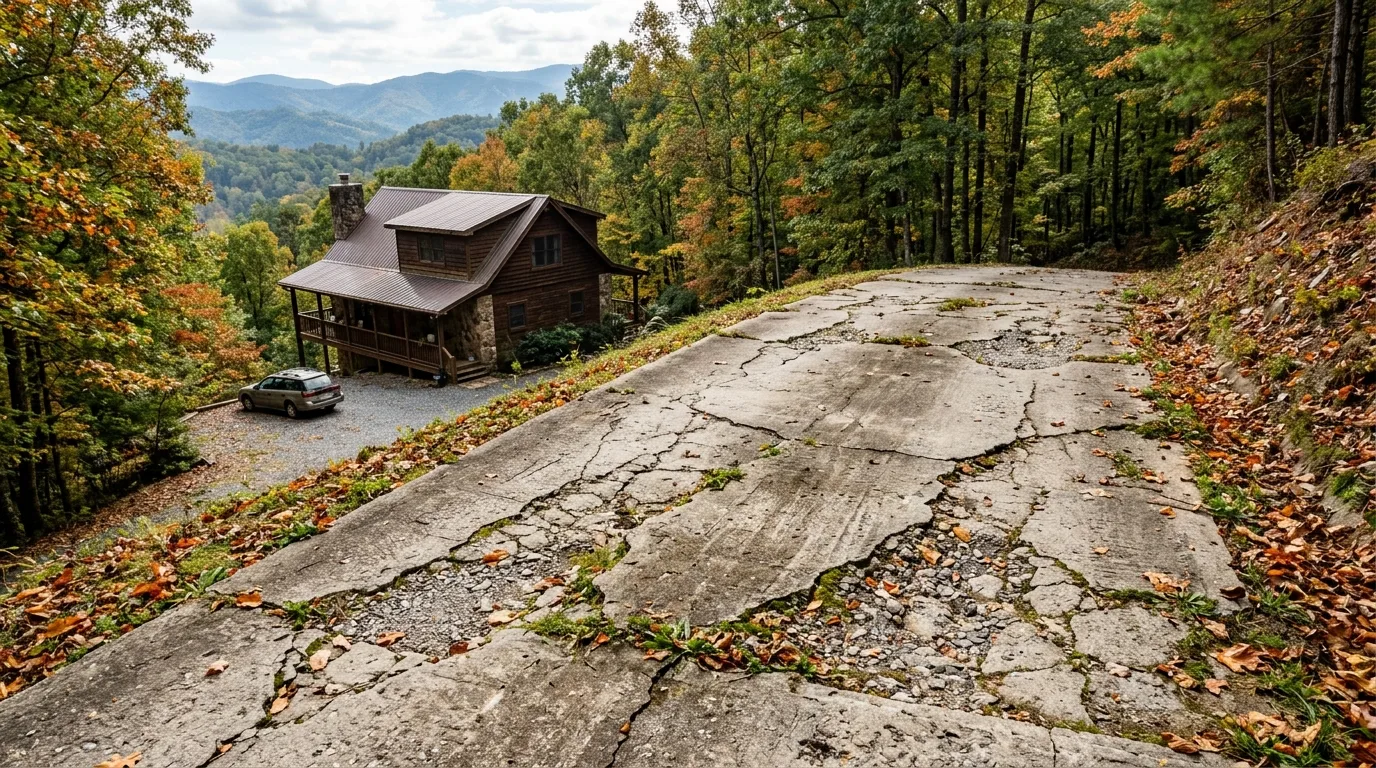
Every spring, Sevierville homeowners walk outside and find that their concrete looks noticeably worse than it did in October. The winter doesn’t produce dramatic single-event damage — it accumulates it gradually, crack by crack, flake by flake, across 40 or more freeze-thaw cycles. The tricky part is knowing which damage warrants immediate repair and which can wait another season. Waiting too long costs significantly more; acting on cosmetic issues you don’t need to fix costs money unnecessarily. This guide covers the 5 warning signs that concrete repair in Sevierville is genuinely warranted — and what each one means for the scope of work ahead.
In this post, we cover what each damage type looks like, what causes it in Sevierville’s specific climate, and what repair approach addresses each condition.
Concrete Repair Assessment in Sevierville
Not sure if your concrete needs repair? We assess existing conditions and give you an honest evaluation. Free estimates across Sevier County. Call (888) 376-0955.
Why Concrete Damage Escalates Faster in Sevierville
The key dynamic that makes Sevierville different from flat-ground markets is the cost of waiting. When a crack opens in concrete, water enters the crack in fall, freezes in December, and expands the crack further. By the following spring, a 1/8-inch crack that could have been sealed for $50 has become a 1/4-inch structural gap requiring patching or full-section replacement.
Homeowners throughout the Governor’s Crossing and Five Oaks areas commonly discover this pattern: they notice minor surface issues, decide to wait a year, and come back to find that one winter’s freeze-thaw cycling has turned a maintenance item into a repair project. In Sevierville’s climate, small concrete damage doesn’t stay small.
Sign 1: Surface Spalling and Flaking
What it looks like: The top layer of concrete is flaking away in thin patches, exposing rough aggregate underneath. The surface has a pitted, rough texture that wasn’t there a year ago.
What causes it: This is classic freeze-thaw surface damage. Water infiltrates the concrete’s surface pores — most commonly in unsealed or improperly sealed concrete — freezes and expands, fracturing the surface cement paste. Each cycle removes a thin layer. After a few winters, the damage becomes clearly visible as delamination of the surface layer.
What it means: Surface spalling on concrete driveways, patios, and sidewalks in Sevierville is the earliest visible sign of freeze-thaw damage. If caught early (when flaking is isolated), resurfacing with a concrete overlay or patching compound can extend the slab’s life significantly. If widespread and the aggregate is extensively exposed, full resurfacing or panel replacement may be necessary. Don’t wait — spalling accelerates with each subsequent winter. See our concrete repair service page for resurfacing options.
Sign 2: Widening Cracks After Winter
What it looks like: Cracks that were present last fall are visibly wider in spring. The edges of the crack may be slightly elevated on one side (indicating sub-base movement).
What causes it: Crack width increases when water in the crack freezes and the 9% volume expansion of ice wedges the crack open further. On Sevier County’s hillside lots with expansive clay sub-base, freeze-thaw crack expansion is compounded by seasonal soil movement — the clay shrinks in dry conditions and expands when wet, creating differential movement that also widens cracks.
What it means: Cracks that are actively widening year-over-year indicate that water is still accessing the crack and that sub-base conditions are contributing to movement. Sealing a widening crack without addressing drainage or sub-base issues provides only temporary relief. A thorough assessment determines whether crack filling, partial slab replacement, or drainage correction is needed.
Crack Assessment for Sevierville Concrete
We assess whether your cracks are structural or cosmetic — and give you honest options. Call (888) 376-0955.
Sign 3: D-Cracking Patterns Near Slab Edges
What it looks like: A series of closely spaced cracks following a curved “D” shape near the edges or joints of the slab. The pattern is denser near the edges than at the center.
What causes it: D-cracking is a specific signature of freeze-thaw distress in coarse aggregate particles near the surface. When aggregate particles absorb water and freeze repeatedly, they fracture, and the surrounding cement paste fractures with them. The pattern concentrates at slab edges because moisture infiltration is highest there.
What it means: D-cracking indicates that the concrete has been in active freeze-thaw distress for multiple seasons. It’s common on driveways and patios throughout Sevierville that are more than 10 years old and were never sealed or were installed without air-entrained concrete mix. Affected panels typically require replacement rather than surface repair — the aggregate damage goes deeper than resurfacing compounds can reach. Once D-cracking is visible, the progression to full panel failure is faster in subsequent winters.
Sign 4: Settlement and Uneven Panels
What it looks like: One side of a control joint is higher than the other. The driveway or patio has a noticeable “lip” at a joint that wasn’t there before. Water puddles in low spots that didn’t pool before.
What causes it: Panel settlement in Sevierville is most often caused by sub-base erosion or clay soil contraction. When water washes fine soil particles out from under a slab (a process called erosion undermining), the panel loses support and settles. Expansive clay soils throughout Sevier County can also cause differential settlement — areas with more clay beneath the slab shrink and expand at different rates than sandier areas, lifting and dropping different panels independently.
What it means: Settled panels create tripping hazards and drainage problems. The most common repair options are mudjacking (pumping a grout mixture beneath the panel to lift it) or panel replacement if the slab is structurally compromised. The right approach depends on the extent of voids beneath and the condition of the panel itself.
Sign 5: Pop-Outs and Surface Pitting
What it looks like: Small conical holes, 1–3 inches across, scattered across the concrete surface. Each hole has a circular ring of fractured concrete around it where a piece broke out.
What causes it: Pop-outs are caused by individual aggregate particles absorbing water, freezing, and breaking out of the surrounding cement paste. The conical shape is a signature of aggregate failure — the fracture point is at the aggregate particle, and the surrounding paste fractures around it.
What it means: Isolated pop-outs are cosmetic damage — they look bad but don’t compromise structural integrity unless numerous and clustered. Widespread pop-outs indicate that the concrete was batched with reactive aggregate or placed without air entrainment in a climate (like Sevierville’s) that requires it. Sealing existing pop-outs prevents water infiltration. If the pattern is extensive, resurfacing with a new bonded overlay prevents further damage by protecting the original surface.
Frequently Asked Questions
Can I repair spalling concrete myself in Sevierville?
Small spalling patches (under 1 square foot) can be addressed with concrete patching compounds available at hardware stores, but the repair has to be done correctly — the patch area must be cleaned, primed with a bonding agent, and filled with the right mix. In Sevierville’s freeze-thaw climate, improperly bonded patches fail faster than the original concrete and make the surface look worse. For widespread spalling or anything near a control joint, professional assessment is worth the cost. We offer free estimates and will tell you honestly whether professional repair or DIY patching is appropriate.
Does cracked concrete always need to be replaced in Sevierville?
No — most concrete cracks in Sevierville can be repaired without full replacement if the sub-base is intact and the crack isn’t actively widening due to structural movement. Crack filling and sealing stops water infiltration and freezing, preventing further damage. Full replacement is typically only necessary when the panel has settled significantly, when D-cracking is extensive, or when the slab has separated from its sub-base. Our assessment process distinguishes repair candidates from replacement candidates before any work is quoted. See our concrete repair service page for full repair options.
How much does concrete repair cost in Sevierville?
Concrete repair costs in Sevierville vary by scope: crack sealing runs $3–$8 per linear foot; patch repairs for spalling typically run $5–$15 per square foot depending on depth; full panel replacement costs $9–$12 per square foot in most residential applications. See our 2026 concrete pricing guide for full cost ranges. The key factor is catching damage early — a $200 crack sealing job in spring can prevent a $2,000 panel replacement three winters later.
Related: